How to Build Consistency
You don't need more discipline. You need a better setup. Here's the real reason your habits keep breaking, and how to fix it by designing your environment instead of fighting your mindset.

Let me tell you something that took me an embarrassingly long time to figure out.
Motivation is not the problem. Willpower is not the problem. The problem is that you are asking yourself to make a hard decision, from scratch, every single day. And some days you will say yes. But most days, when you are tired, stressed, or just want to sit down for five minutes, you will say no. And then you will feel bad about it. And then nothing changes.
I have been there. Many times.
What actually worked for me, what helped me lose over 20 kilograms and keep most of it off, was not finding some secret reserve of discipline I did not know I had. It was making the good choice easier than the bad one. Every single time.
This is the real foundation of building consistency. And once you get it, you stop blaming yourself and start redesigning your environment instead.
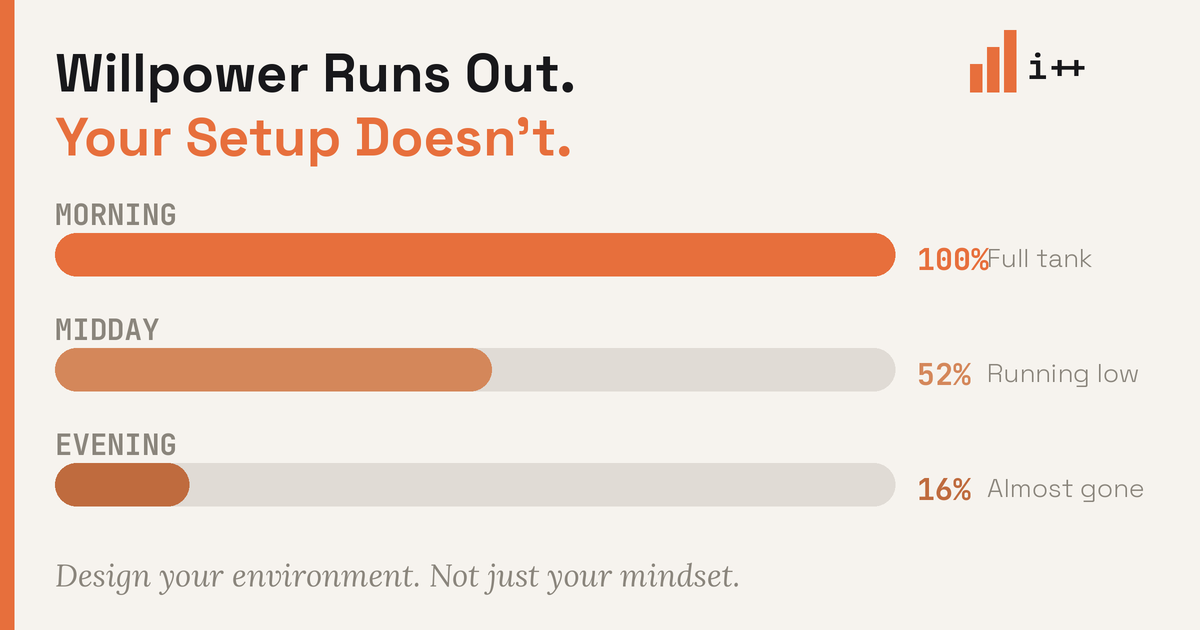
Why Willpower Is the Wrong Tool for Building Consistency
Here is the thing about willpower: it depletes. By the time you get home from work, or get through a stressful morning, or sit through back-to-back calls, your willpower tank is already running low. Asking yourself to then make a fully reasoned, motivated decision to work out or eat well is asking a lot.
Decision fatigue is real. The more choices you make throughout a day, the worse your subsequent choices tend to get. This is not a character flaw. This is just how humans are wired.
So instead of trying to be someone with more willpower, the goal is to build a life where willpower barely needs to show up. That shift in thinking is what changes everything when it comes to building long-term consistency.
The Setup Is the System
Consistency is not about who you are. It is about what you have set up around you. Here is what that looks like in practice, and these are all things I have personally used.
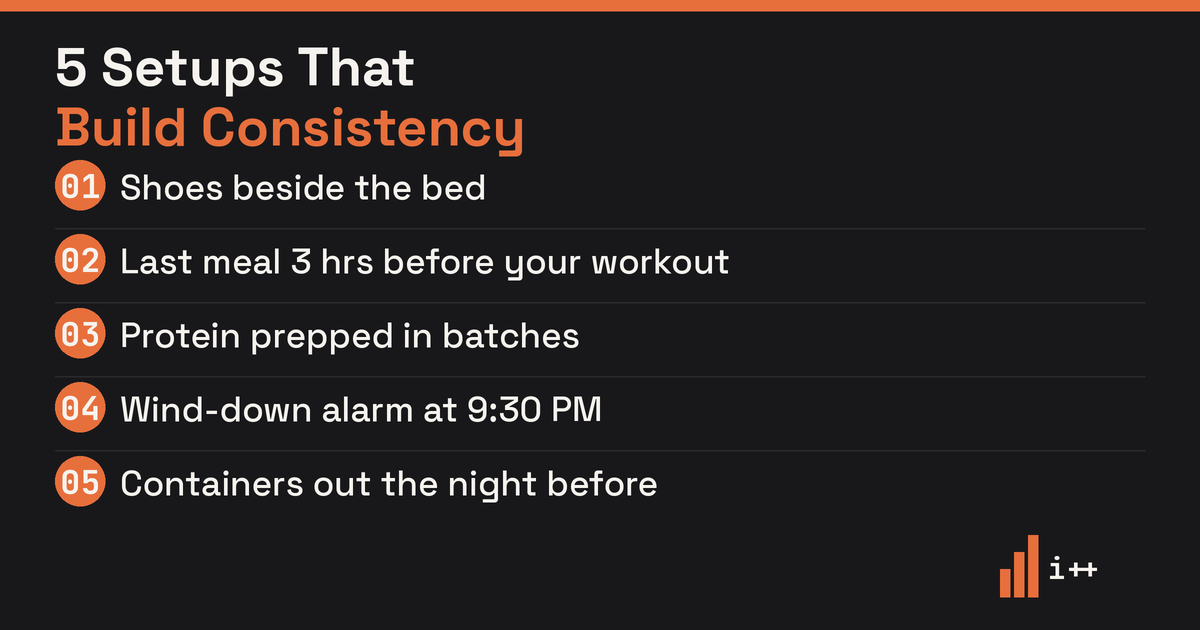
1. The Morning Workout: Put Your Shoes Beside the Bed
If your goal is to work out in the morning, the worst thing you can do is wake up and then decide whether to do it.
By the time your alarm goes off, your brain is already negotiating. "Maybe tomorrow. I'll do a longer session tomorrow." We all know how that ends.
What I started doing instead: putting my gym shoes right beside the bed the night before. Clothes out. Water bottle filled. Everything ready. So when the alarm goes off, there is no setup step. There is just movement.
The decision was made the night before, when you were motivated. In the morning, you just has to follow through, and the bar for that is as low as it can possibly be. You are not relying on morning motivation. You are making morning you the executor, not the decision maker.
2. The Post-Work Workout: Time Your Last Meal
Training after work is harder than it sounds. You finish your day mentally drained, and your body wants food and rest, not squats.
One thing that quietly killed my post-work sessions was eating too close to the gym. A heavy lunch or a late-afternoon snack meant I was either sluggish during the session or genuinely uncomfortable. So I started timing my last meal to be at least three hours before I planned to train.
That means if you hit the gym at 7 PM, you wrap up eating by 4 PM. And you plan that meal deliberately, not a random desk lunch at whatever time. A deliberate, timed meal that physically sets you up for the session.
This one change removed the physical excuse. I showed up feeling ready, not weighed down. And when your body is ready, your mind tends to follow.
If you want to go deeper on what to eat in that pre-workout window, my post on protein for fat loss covers the numbers and the reasoning in full.
3. The Protein Goal: Make It the Default, Not the Effort
If you have been following this series, you already know I think protein is the single most important nutritional lever for fat loss. But knowing you need to hit 120 grams a day and actually hitting it are two very different things.
People who struggle with protein are almost always trying to figure it out in the moment, when they are already hungry. That is exactly when willpower fails and convenience wins.
What made this click for me: preparing protein sources in batches. Cooked soya beans or paneer in the fridge. Greek yogurt in the front, at eye level, so it is the first thing you see when you open the fridge door.
You are not making a nutrition decision at 1 PM when you are starving. You already made that decision on Sunday. Now you are just eating what is already there.
The environment did the work.
4. The Sleep Schedule: Remove the Scroll, Set the Wind-Down Alarm
This one ties directly back to example one, because if you want to work out at 6 AM but you are going to bed at 1 AM, no amount of shoe-placement is going to help you.
Sleep is where habits either get supported or quietly fall apart. And most of us have a genuinely bad setup for sleep, because we have never thought of it as something to design.
What I changed: I wind-down at 9:30 PM. Not a bedtime alarm. A reminder to start wrapping up. And I moved my phone away from the bed. Both are tiny structural changes. But they removed the two biggest blockers, which are endless scrolling and the endless internal debate about when to actually sleep, without requiring willpower at all.
You sleep better. You wake up more willing. You show up. It really is that connected.
5. The Meal Prep Session: Set Up yesterday, Execute today
A lot of people say they want to meal prep but never actually do it. Not because they do not care. Because today afternoon arrives and the kitchen is not ready, there is no plan, and the friction is just too high.
Here is what changed it for me: I started doing a five-minute setup on what I will eat tomorrow. Pull out the containers. Check what is in the fridge. That is it.
In the morning, I do not wake up and decide to meal prep. I wake up to a kitchen that is already half-set up. The containers are out. The plan is visible. The decision was already made the night before.
You are dramatically more likely to follow through on something when the prep is already done. The setup is the commitment.
The Pattern Behind Every Example
Every single example above follows the same logic.
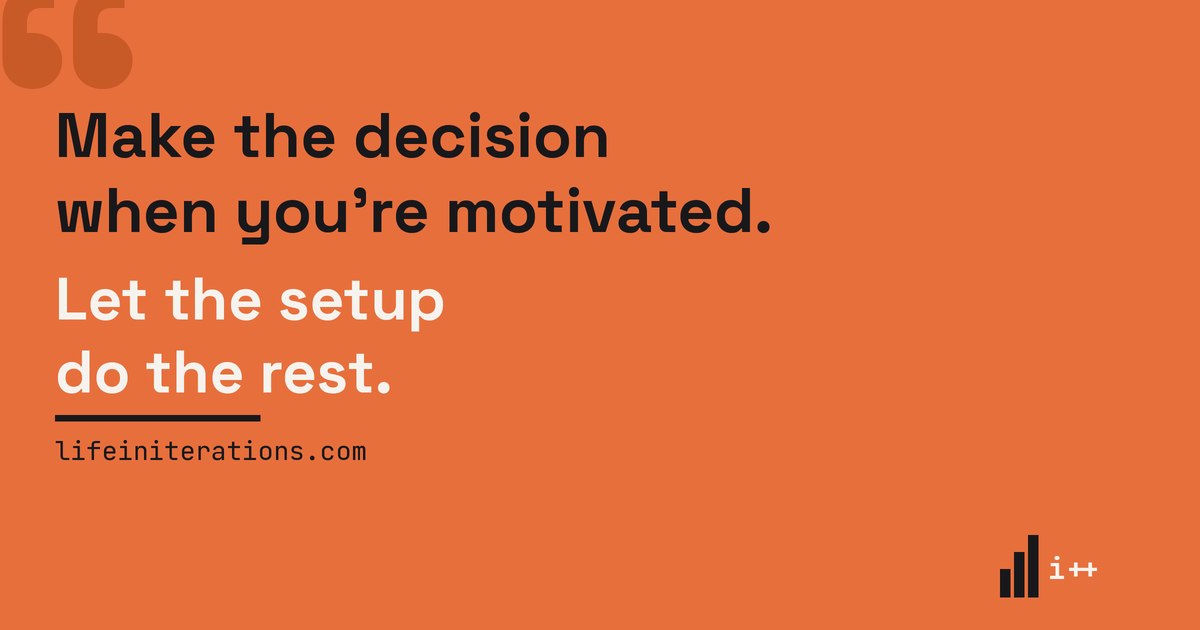
You make the important decision when you are calm and motivated, not when you are tired and tempted. Then you arrange your environment so that following through is the path of least resistance.
Shoes by the bed. Meals timed. Protein prepped. Phone away from me. Containers out today.
None of these require exceptional discipline. They just require thinking one step ahead of your future, less-motivated self.
This Is What Consistency Actually Looks Like
I used to think consistent people were just more motivated than me, or more disciplined, or somehow had more hours in the day. What I found out is that consistent people are usually just better at setting things up.
Consistency is not a personality trait. It is a system you design.
And the good news: you can design it. Starting today. Starting with one thing from the list above.
If you have been following this health series, you know I have written about understanding your TDEE and why protein is the most important and non-negotiable piece of the puzzle. All of that knowledge is genuinely useful. But only if you show up consistently enough to apply it.
The knowledge is step one. The setup is step two. And step two is where most people quietly drop off.
Pick one thing from your routine that keeps falling apart. Ask yourself: what would make following through on this easier? Not more motivating. Just easier.
Then build that thing. Tonight if you can.
That is how you build consistency. Not by wanting it more. By making it harder to skip.