Protein: The Science, the Myths, and the Exact Numbers You Need
How much protein do you actually need for fat loss? I break down the evidence-based numbers, debunk the most common myths, and show you why protein is the most important variable inside your calorie deficit.

In the last post, I walked you through TDEE — the total energy equation that tells you how many calories your body actually needs. If you have not read that one yet, start there.
I genuinely wish someone had handed me a clear breakdown of protein when I started. The internet is full of noise here. Gym bros saying you need 300g a day. Others saying too much protein destroys your kidneys. Influencers suggesting a smoothie with 15g of protein is "high protein." It is exhausting.
Why Protein Is the Most Important Variable Inside Your Deficit
When you are in a calorie deficit, your body needs fuel. The problem is that your body is not picky about where it gets that fuel. Given the chance, it will happily break down muscle tissue for energy right alongside fat. That is not the goal. You want to lose fat while keeping the muscle you have built.
Protein is how you protect that muscle. And it does a few other things that make it genuinely special compared to carbs and fat.
1. It Preserves Muscle During a Deficit
When you eat enough protein, your body has a continuous supply of amino acids available. This means it can repair and maintain muscle tissue instead of cannibalizing it for fuel. Research from the International Weight Control Registry confirmed that higher protein intake during weight loss directly predicts better lean mass outcomes.
2. It Burns Calories Just Being Digested (TEF)
Every time you eat, your body spends energy digesting the food. This is called the Thermic Effect of Food, or TEF. The interesting thing is that different macronutrients cost very different amounts of energy to process.
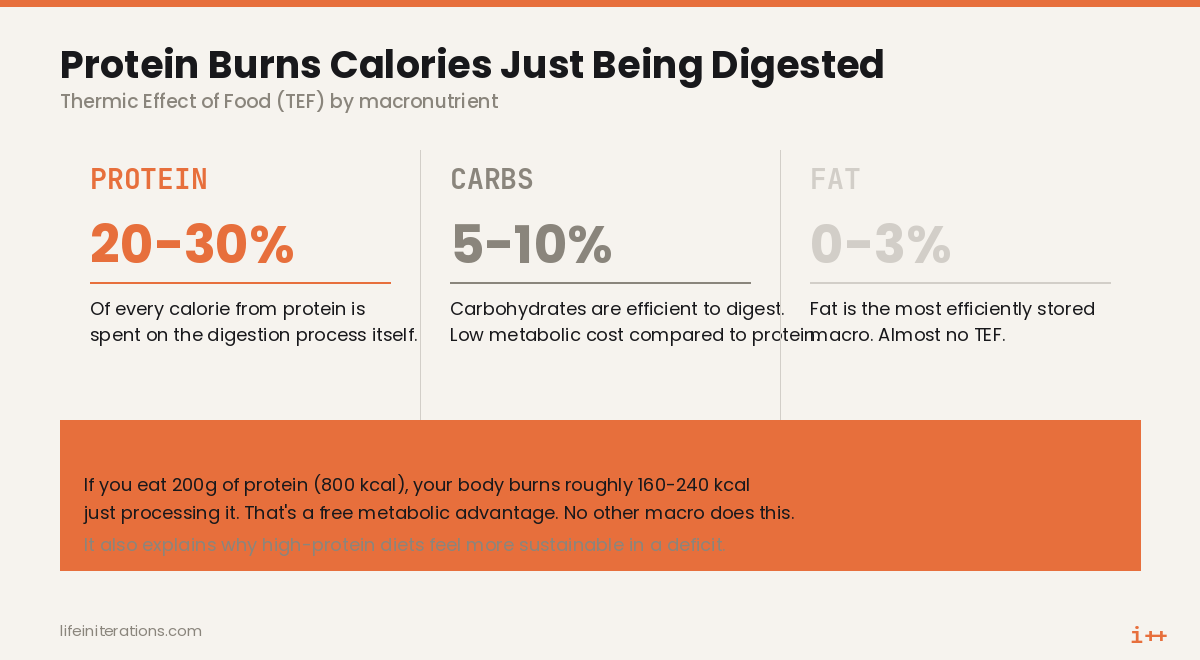
Fat costs almost nothing: around 0 to 3% of its calories go toward digestion. Carbohydrates cost about 5 to 10%. Protein costs 20 to 30%.
What that means in practice: if you eat 200g of protein (about 800 calories), your body burns roughly 160 to 240 calories just processing it. You are getting a meaningful metabolic discount built into every high-protein meal. No other macronutrient gives you this.
3. It Keeps You Fuller for Longer
This one I noticed before I even understood the mechanism. High protein meals just keep hunger away longer. The science behind it involves a couple of hormones: ghrelin (the "I'm hungry" signal) gets suppressed more effectively by protein than by carbs or fat, and satiety signals from peptide hormones like GLP-1 and CCK get amplified.
A study published in the American Journal of Clinical Nutrition put people on an isocaloric high-protein diet (30% protein) and found that spontaneous calorie intake dropped by an average of 441 calories per day compared to a normal-protein diet. They were not trying to eat less. The protein was just making them less hungry.
The Number Everyone Gets Wrong: How Much Protein Do You Actually Need?
Here is where the internet fails people most consistently. The RDA (Recommended Dietary Allowance) for protein is 0.8g per kilogram of body weight per day. You will see this number everywhere. It sounds official and scientific.
The problem is that the RDA is the minimum needed to prevent deficiency in a sedentary population. It was never designed as an optimization target for someone in a calorie deficit trying to preserve muscle.
Think of it this way: the RDA for vitamin C is enough to prevent scurvy. That does not mean it is the amount that supports optimal immune function and collagen production.
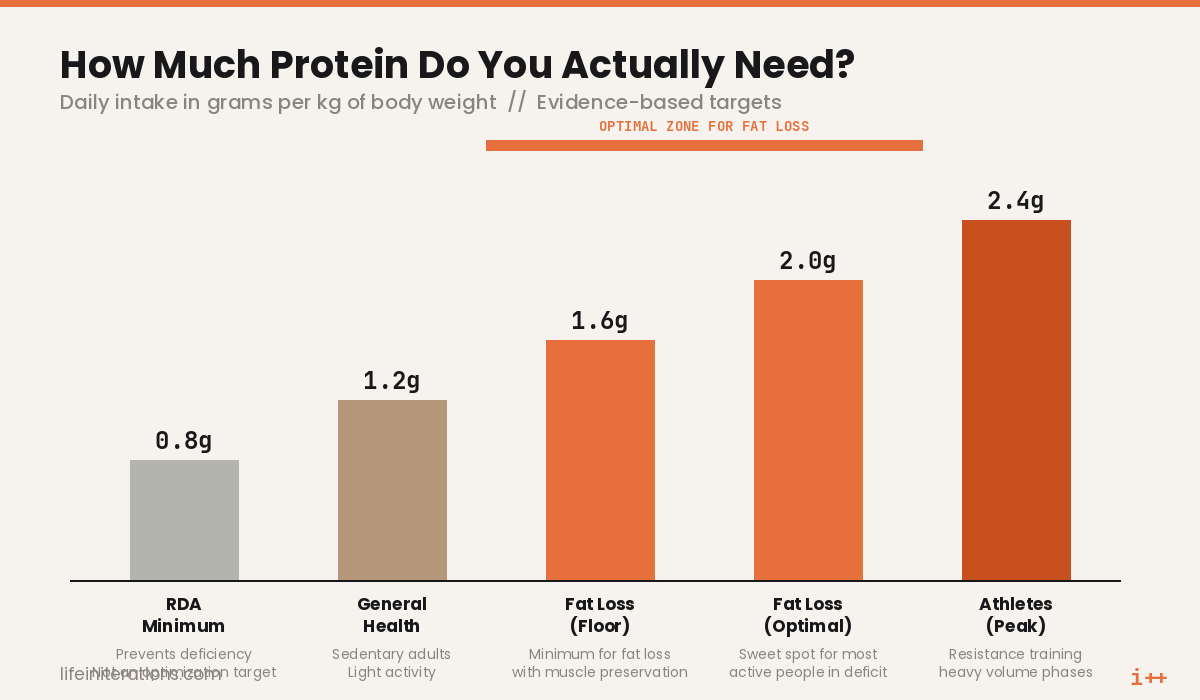
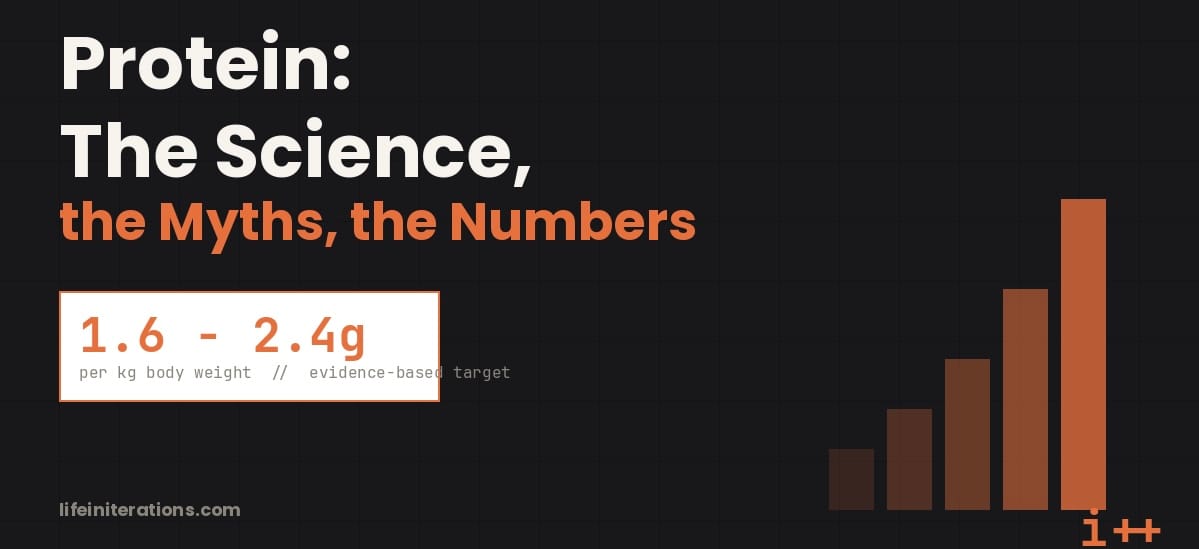
For fat loss with muscle preservation, the evidence-based range is 1.6g to 2.4g per kilogram of body weight per day.
For most people actively trying to lose fat while lifting, 1.8g to 2.2g per kilogram of body weight is the practical sweet spot.
What If You Are Significantly Overweight?
Using your current body weight to calculate protein targets can overestimate your needs if you have a lot of fat to lose. In that case, use your target body weight (the weight you are aiming for) or your lean body mass instead. The muscle you are trying to protect scales with your lean tissue, not your total weight.
A Quick Example
At 90kg with a fat loss goal, you would target:
- Floor: 90 x 1.6 = 144g of protein per day
- Optimal range: 90 x 2.0 = 180g per day
Hitting 160g to 180g daily puts you solidly in the zone where the research says good things happen.
Protein Myths That Need to Retire
These come up constantly. Let me deal with them directly.
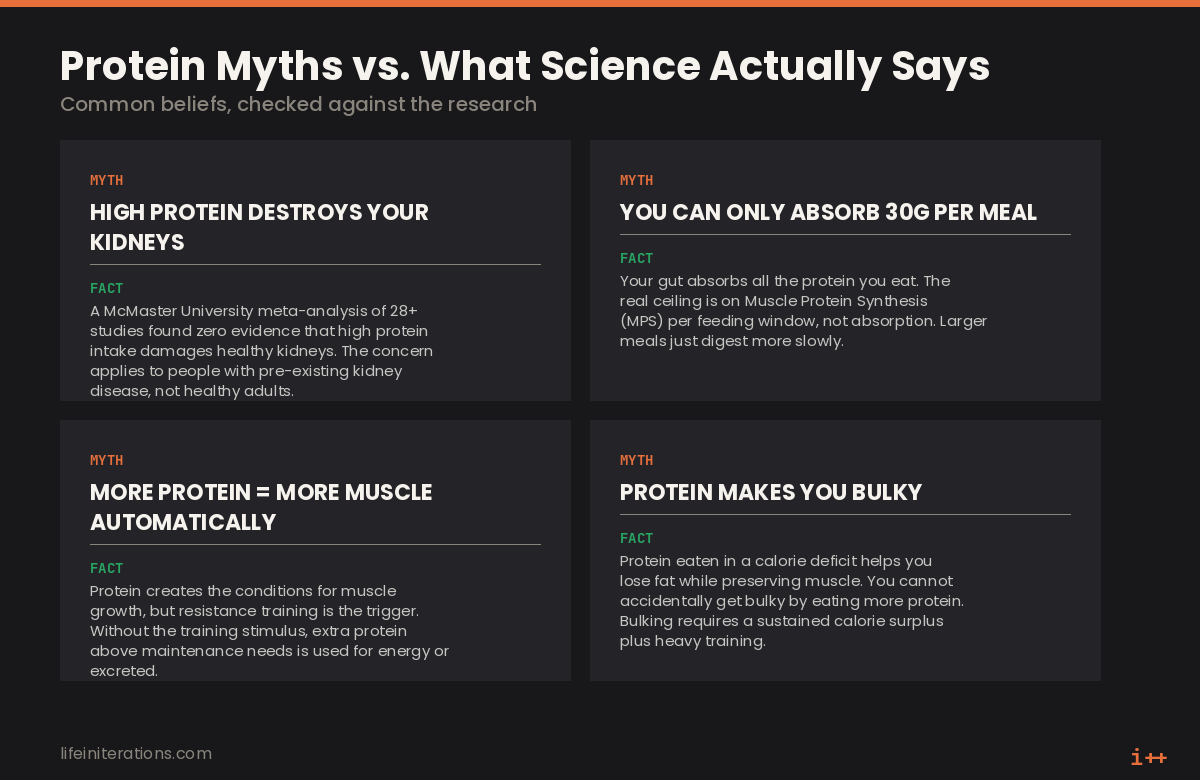
Myth 1: "Too Much Protein Destroys Your Kidneys"
This is probably the most persistent myth in nutrition. It originates from legitimate medical guidance for people who already have chronic kidney disease. When your kidneys are compromised, reducing protein intake is genuinely important. But that concern was misapplied to healthy adults decades ago and has refused to die since.
In 2018, researchers at McMaster University published a meta-analysis examining data from 28 studies and found no evidence that high-protein diets harm kidney function in healthy people. As Professor Stuart Phillips, who led the study, put it: "there's just no evidence to support this hypothesis: in fact, the evidence shows the contrary is true: higher protein increases, not decreases, kidney function."
If you have healthy kidneys, you do not need to worry about this. If you have pre-existing kidney disease, speak to your doctor.
Myth 2: "You Can Only Absorb 30g of Protein Per Meal"
This one shows up in every gym conversation. The idea is that eating more than 30g of protein in a sitting is wasted.
Your gut actually absorbs virtually all the protein you eat. Absorption rates vary by protein source (roughly 3g per hour for egg protein, up to 10g per hour for whey), but your digestive system adapts to larger meals by slowing gastric emptying. Nothing is wasted at the gut level.
What does have a ceiling per meal is Muscle Protein Synthesis (MPS): the process of building and repairing muscle tissue. Research suggests MPS is maximally stimulated somewhere in the range of 20 to 40g of high-quality protein per meal, depending on your body size, training status, and age. The key driver is the amino acid leucine, which needs to hit roughly 2.5 to 3g per meal to fully activate the mTOR signaling pathway that triggers MPS.
So eating 80g of protein in one sitting will not waste the extra 50g. Your body will still use it. It just will not give you triple the muscle-building signal. This is why spreading protein across 3 to 5 meals tends to give you more total MPS stimulation across the day compared to front-loading it all in one or two meals.
Myth 3: "More Protein Means More Muscle Without Training"
Protein provides the raw material. Resistance training provides the stimulus. Without the training signal, your body has no reason to synthesize new muscle tissue at scale. The amino acids still get used for other important functions (hormone production, enzyme synthesis, immune function), but they will not build significant new muscle on their own.
The combination of adequate protein and progressive resistance training is what changes body composition. Neither one alone is nearly as effective as the two together.
Myth 4: "Protein Will Make You Bulky"
Muscle growth requires a calorie surplus sustained over time plus heavy progressive training. Protein eaten in a calorie deficit does the opposite of making you bulky. It helps you preserve the muscle you have while fat comes off.
The people you see who are visibly muscular have spent years in calorie surpluses doing high-volume resistance training. That does not happen by accident, and it definitely does not happen just from eating chicken breast.
How to Actually Hit Your Protein Target
Knowing the number is step one. Getting there consistently is the actual work. Here is how I think about it.
Spread it across your meals. If your target is 160g per day and you eat four meals, you are looking for roughly 40g per meal. This is easier to hit than trying to get 100g at dinner and it is actually better for MPS stimulation throughout the day.
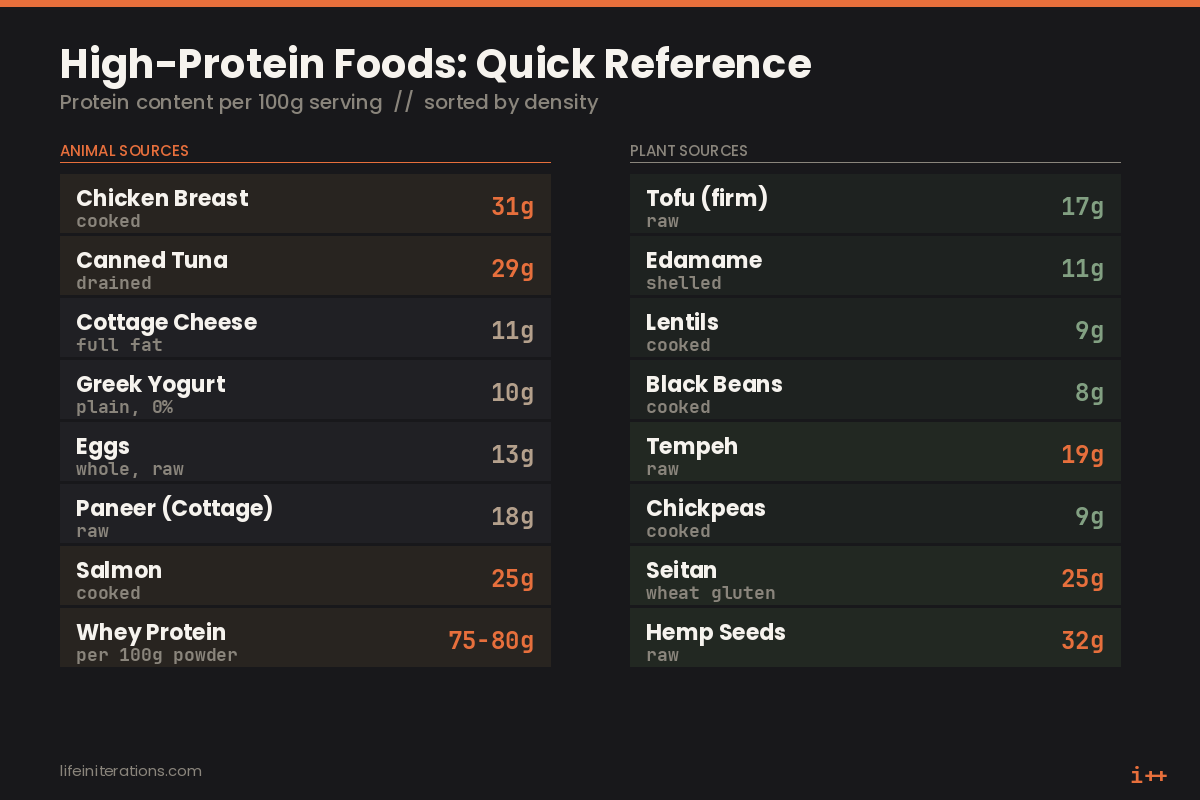
Build your meals around the protein source. This flipped my approach entirely. Instead of asking "what do I want to eat today" and then hoping there is enough protein in it, I start with the protein and build the rest of the meal around it. Chicken breast, paneer, eggs, Greek yogurt, cottage cheese, tuna, fish.
Use a few reliable anchor meals. I do not want to calculate protein from scratch every day. I have three or four meals I know by heart that reliably hit my protein targets. They rotate. It removes the decision fatigue.
Track it, at least at the start. Use any food tracking app (Cronometer, MyFitnessPal, whatever you prefer). You do not need to track forever, but the first two weeks of tracking will genuinely surprise you. Most people are eating about half the protein they think they are. Once you have built the intuition, you can dial back the tracking.
Count the grams, not the number of meals. Whether you hit your protein in three meals or five does not matter as much as hitting the total daily number. Do not let meal timing perfectionism get in the way of just reaching your target.
Where this Fits in the Iteration Loop?
In the TDEE post, I described the approach as: calculate your target, create a deficit, measure what happens, adjust. Protein is the variable inside that target that determines whether the weight you lose is fat or fat plus muscle.
Getting protein right is the difference between ending a cut looking leaner and looking like a smaller version of your worst self. The research is clear on this. The practical application is genuinely manageable once you have the number and a few anchor meals dialed in.
Next in this series: we are going to talk about carbohydrates and fat; specifically how to allocate the remaining calories after protein is set, and why the split matters far less than most people think.
If you found this useful, the best thing you can do is share it with someone who is still repeating the kidney myth in 2026.